Búsqueda personalizada
Mostrando entradas con la etiqueta Trastornos del Desarrollo. Mostrar todas las entradas

10 de octubre de 2012

A Mutation in the Rett Syndrome Gene, MECP2, Causes X-Linked


A Mutation in the Rett Syndrome Gene,

MECP2, Causes X-Linked
Mental Retardation and Progressive Spasticity in Males


Abstract

Rett syndrome (RTT, MIM 312750) is a progressive neurodevelopmental disorder and one of the most common causes of mental retardation in females, with an incidence of 1 in 10,000-15,000 (ref. 2). Patients with classic RTT appear to develop normally until 6-18 months of age, then gradually lose speech and purposeful hand use, and develop microcephaly, seizures, autism, ataxia, intermittent hyperventilation and stereotypic hand movements. After initial regression, the condition stabilizes and patients usually survive into adulthood. As RTT occurs almost exclusively in females, it has been proposed that RTT is caused by an X-linked dominant mutation with lethality in hemizygous males. Previous exclusion mapping studies using RTT families mapped the locus to Xq28 (refs 6,9,10,11). Using a systematic gene screening approach, we have identified mutations in the gene (MECP2 ) encoding X-linked methyl-CpG-binding protein 2 (MeCP2) as the cause of some cases of RTT. MeCP2 selectively binds CpG dinucleotides in the mammalian genome and mediates transcriptional repression through interaction with histone deacetylase and the corepressor SIN3A (refs 12,13). In 5 of 21 sporadic patients, we found 3 de novo missense mutations in the region encoding the highly conserved methyl-binding domain (MBD) as well as a de novo frameshift and a de novo nonsense mutation, both of which disrupt the transcription repression domain (TRD). In two affected half-sisters of a RTT family, we found segregation of an additional missense mutation not detected in their obligate carrier mother. This suggests that the mother is a germline mosaic for this mutation. Our study reports the first disease-causing mutations in RTT and points to abnormal epigenetic regulation as the mechanism underlying the pathogenesis of RTT.
 

Erratum

In the October 2000 issue of the Journal, in the report “A Mutation in the Rett Syndrome Gene, MECP2, Causes X-Linked Mental Retardation and Progressive Spasticity in Males” by Meloni et al. (67:982–985), there was an error in the penultimate sentence of the second complete paragraph on page 983: in addition to the Murphy et al. (1994) reference, there also should be the citation “M. D'Esposito and F. Filippini, unpublished data.” The authors regret this omission.
http://www.mediafire.com/view/?jisd70jfjasfkh4


29 de mayo de 2011

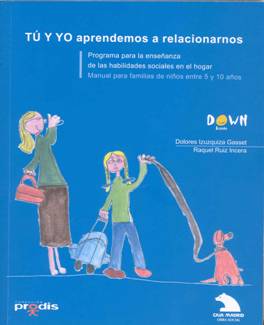
Tu y yo Aprendemos a relacionarnos

Tú y yo aprendemos a relacionarnos: programa para la enseñanza de las habilidades sociales en el hogar, manual para familias de niños entre 5 y 10 años


Autor/es
Izuzquiza Gasset, Dolores; Ruiz Incera, Raquel;
Publicación: Madrid: Federación Española de Instituciones para el Sindrome Down, 2006
Desc. física: 122 p.; 21x17 cm
ISBN / ISSN: 978-84-611-4518-8; 84-611-4518-6
Resumen:
Este manual para familias de niños entre 5 y 10 años, resulta una herramienta muy útil para ayudar, a través de unas sencillas orientaciones, a que los niños pongan en práctica, con su familia y amigos, habilidades de interacción social qeu les permitan relacionarse cada día mejor con todas las personas que se encuentran a su alrededor. En él se explica como el binomio casa-escuela debe ir unido en armonía, trabajar codo con codo, para que los niños aprendan a relacionarse.

Información recogida de Down (2007, Julio) 35
Notas:
Documentos disponibles y ubicados en la Biblioteca del Imserso

Contenido:

  1. 1. Introducción. 19
    2. ¿Qué son las habilidades sociales? 23
    3. Identificación de los perfiles de socialización en niños con discapacidad intelectual. 29
    4. Estrategias imprescindibles para incrementar conductas sociales en el hogar: 33
    4.1. El refuerzo positivo. 33
    4.2. El modelado. 39
    4.3. Las rutinas. 41
    4.4. El acuerdo y la firmeza en las actuaciones. 45
    5. Habilidades sociales básicas para enseñar y aprender durante la infancia: 47
    5.1. Habilidades de carácter no verbal. 48
    5.2. Habilidades de carácter verbal. 74
    5.3. Habilidades relacionadas con sentimientos y emociones. 94
    5.4. Habilidades para lograr un auto-concepto positivo. 111
    6. Conclusiones y orientaciones. 114
    7. Bibliografía. 121
DESCARGA DANDO CLICK ACA


24 de septiembre de 2009

LOS TRASTORNOS GENERALES DEL DESARROLLO UNA APROXIMACIÓN DESDE LA PRÁCTICA

LOS TRASTORNOS GENERALES DEL DESARROLLO UNA APROXIMACIÓN DESDE LA PRÁCTICA


La Dirección General de Participación y Solidaridad en la Educación ha publicado recientemente una monografía en tres volúmenes titulada "Los trastornos generales del desarrollo. Una aproximación desde la práctica". Esta colección de materiales ofrece una revisión de la naturaleza del alumnado con trastorno del espectro autista y de las características diferenciales con respecto a la construcción de la teoría de la mente, conjugando la información teórica y la práctica.  


En esta publicación han participado profesionales de la Consejería de Educación, de la Consejería de Salud y expertos de las Asociaciones que representan al alumnado con Trastorno del Espectro Autista.


VOLUMEN I 


LOS TRASTORNOS DEL ESPECTRO AUTISTA


VOLUMEN II 


EL SÍNDROME DE ASPERGER.


RESPUESTA EDUCATIVA
 

VOLUMEN III


PRÁCTICAS EDUCATIVAS Y RECURSOS DIDÁCTICOS